The Ultimate Charango Wood: Discovering the Naranjillo Tree
There is a tree that grows in the dry valleys of central Bolivia, between 2,200 and 2,700 meters above sea level, on the rocky slopes facing the Río Grande, which until 2005 did not even have an official scientific name. Yet, for more than a century, the luthiers of Aiquile, Bolivia, and the surrounding valleys have known it very well: they call it naranjillo because of its lumpy fruits, or less frequently perilla (Spanish for “little pear”). From a single, characteristic piece of this timber, the soundbox and neck of the instrument are born, making it the most iconic charango wood in history.
If I were to ask you what symbol you associate with this Andean instrument, I am sure you would first think of an armadillo. In reality, Bolivian luthiers have for decades abandoned the prevalent use of this endangered animal, opting instead for sustainable tonewoods. The charango coming from Bolivia, for more than 30 years now, has been predominantly crafted from this tree, which fully deserves the title of The Charango Tree. Its common name is Naranjillo, and scientific taxonomy calls it Aspidosperma resonans.
A new species described thanks to the instrument
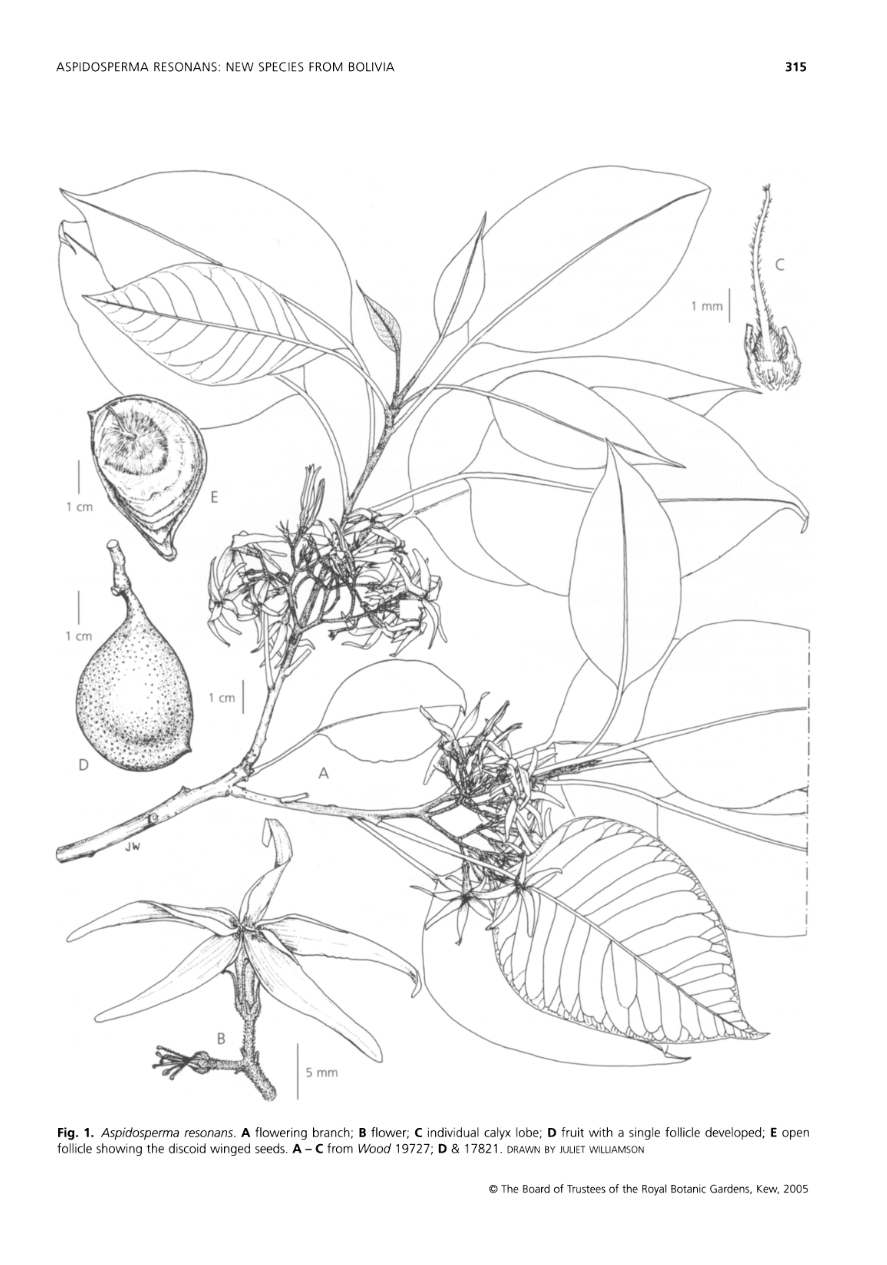
In 2005, three botanists from the Royal Botanic Gardens, Kew — D. J. Goyder, J. R. I. Wood, and H. J. Williamson — published the formal description of this species in the journal Kew Bulletin, which until then had been confused with the similar Aspidosperma pyrifolium. Right in the abstract of their work, the researchers emphasize that when it comes to making a charango, the wood of this plant is the traditional choice par excellence. This is one of those rare instances where folk luthiery — and from a region as remote as the Bolivian valleys, no less — enters directly into a botanical taxonomy publication.
The confusion with A. pyrifolium was understandable: both species belong to the same genus within the Apocynaceae family and share many vegetative characteristics. However, A. resonans distinguishes itself by certain botanical traits and, above all, by its distribution range, which occurs at a significantly higher altitude. It is a highland valley species, not one from the hot plains. Its scientific name, resonans, also points to its status as the best wood for charango building due to its exceptional acoustic and resonant properties.
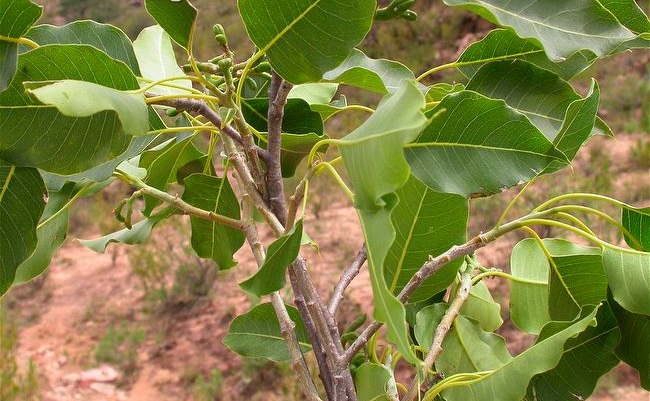
What Naranjillo looks like
Aspidosperma resonans is a tree of variable size: in areas most exploited by instrument makers, it is now found almost exclusively as a bush of 2 to 4 meters, whereas in the most remote corners of its range, tree specimens reaching 13 meters in height with trunks of about 40 centimeters in diameter can still be found.
The leaves are alternate and glossy, with a characteristically elongated tip. The fragrant flowers appear when the plant is in full leaf: flowering occurs mainly in October, before the rainy season.
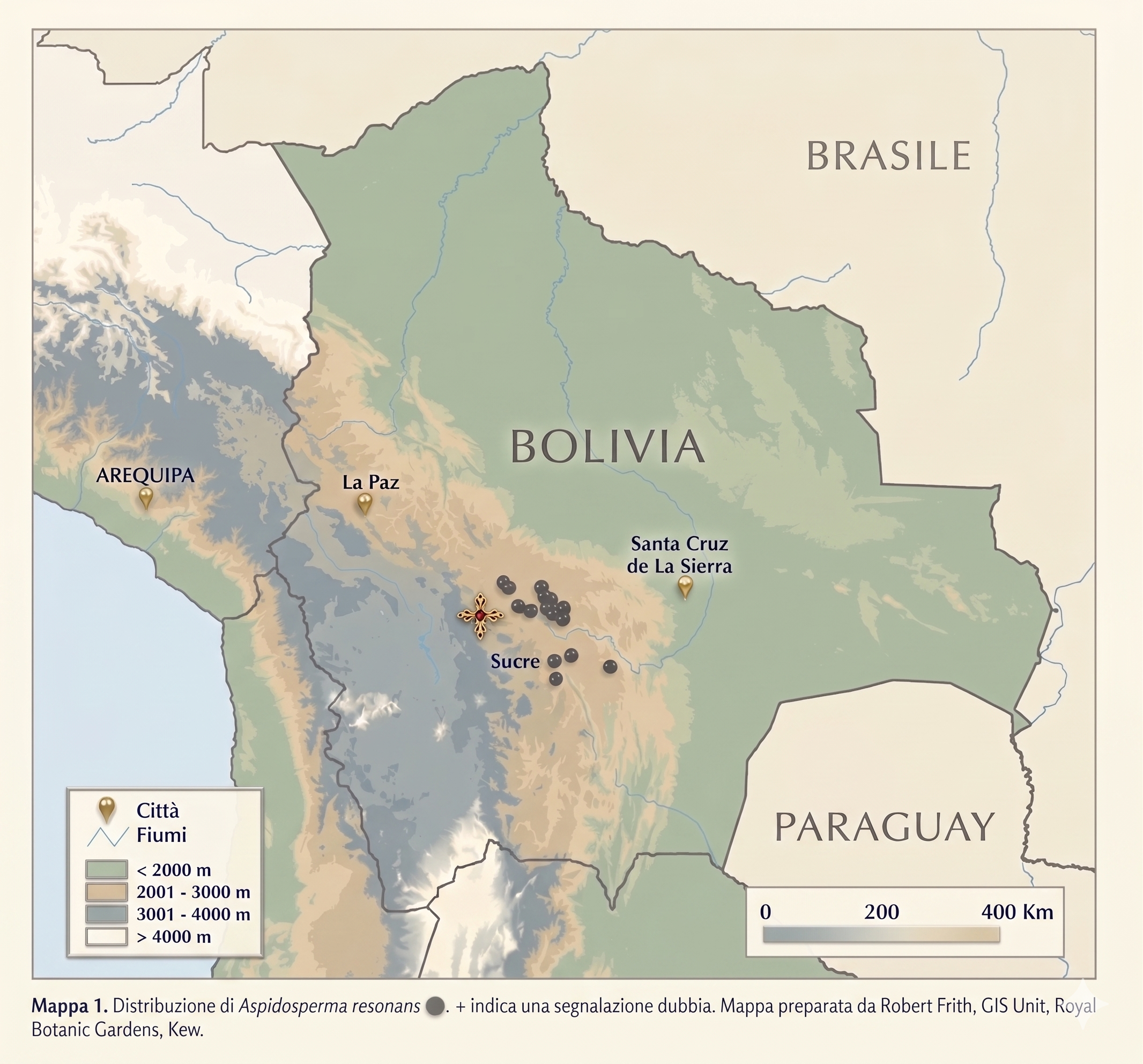
As shown in this map, the species has a restricted distribution range: the internal Andean valleys of the Río Grande system, in the regions of Cochabamba, Chuquisaca, and Potosí. The main documented sites are around Sucre, Torotoro, Mizque, and, of course, Aiquile, the world capital of Andean luthiery.
The characteristics of the wood in Andean luthiery
What makes A. resonans precious to luthiers searching for the ideal wood for charango construction is the very nature of its timber: two-toned, with honey-yellow zones alternating with reddish-orange veins, it is a hard, compact wood that is particularly resistant to insect attacks thanks to chemical substances present in its latex. In a traditional instrument, the soundbox and neck are carved from a single solid block, a building technique that makes having specimens of adequate diameter essential.
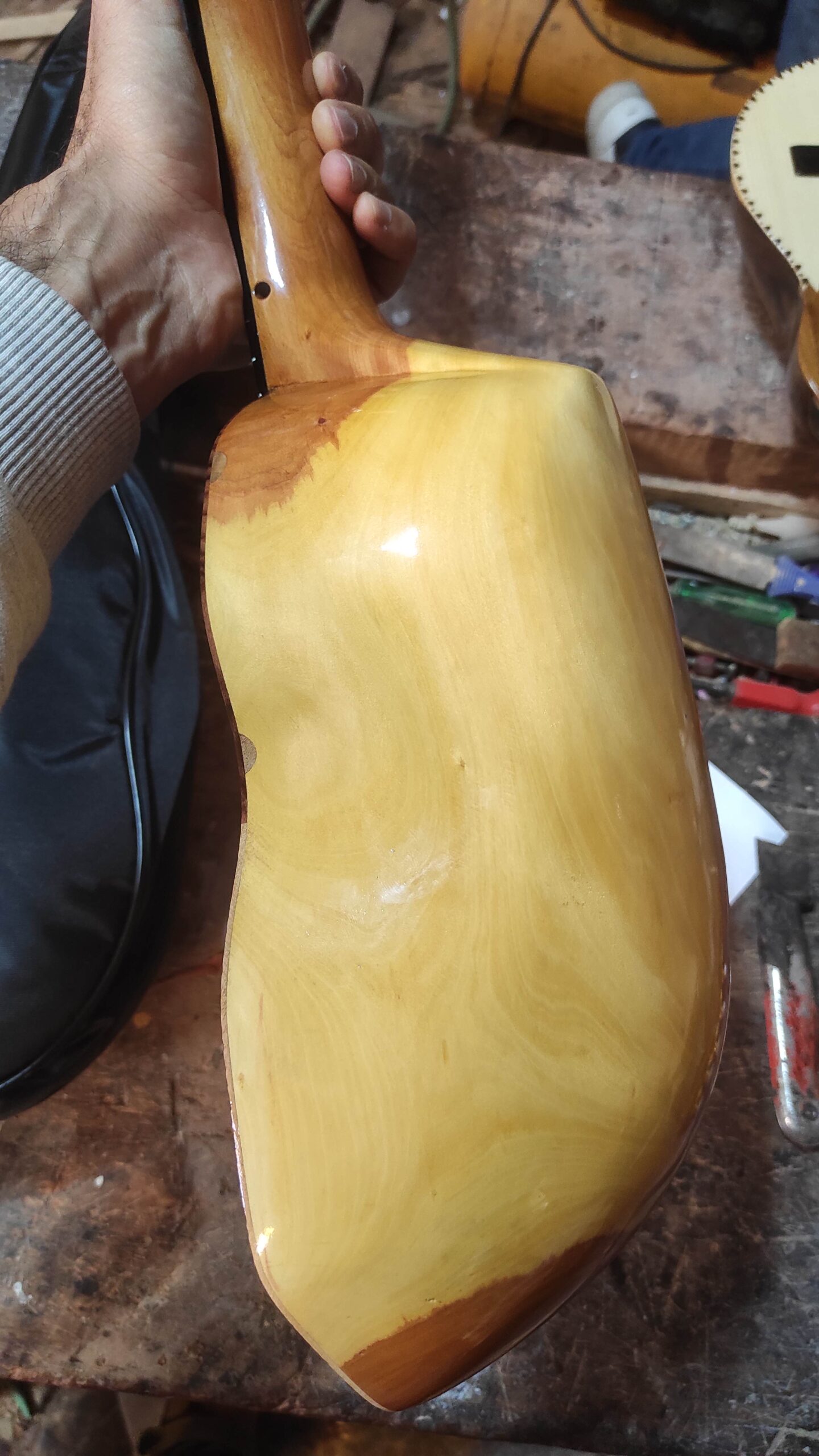
Aiquile is considered the Bolivian capital of production. But botanical research has documented a worrying reality: mature trees can no longer be found in the entire Aiquile area. In Villa Serrano, another production hub, builders even reported that they could no longer find the plant nearby, despite botanical collections still documenting its presence there in 2005.
Another tonewood endangered because of musical instruments?
At the time of the study — 2005 — researchers analyzing the conservation status of A. resonans placed the species in the “Near Threatened” (NT) category. This was because, despite a limited area of occupancy of less than 2,000 km², fragmented populations, and a declining number of mature individuals, shrub populations were still present in various locations and regularly produced flowers and fruits, even in their shorter forms.
Environmental impact studies over the last twenty years show that the population of mature trees has practically disappeared precisely due to the high demand for wooden charangos. Something that, after all, had also happened with the armadillo. The paradox is clear: the Charango Tree is threatened by the very production of the instruments; or, to be more honest, by the complete absence of local regulation regarding the use and protection of the existing forest heritage. Indeed, where the trees are not harvested for luthiery, the plant grows undisturbed to its natural size.
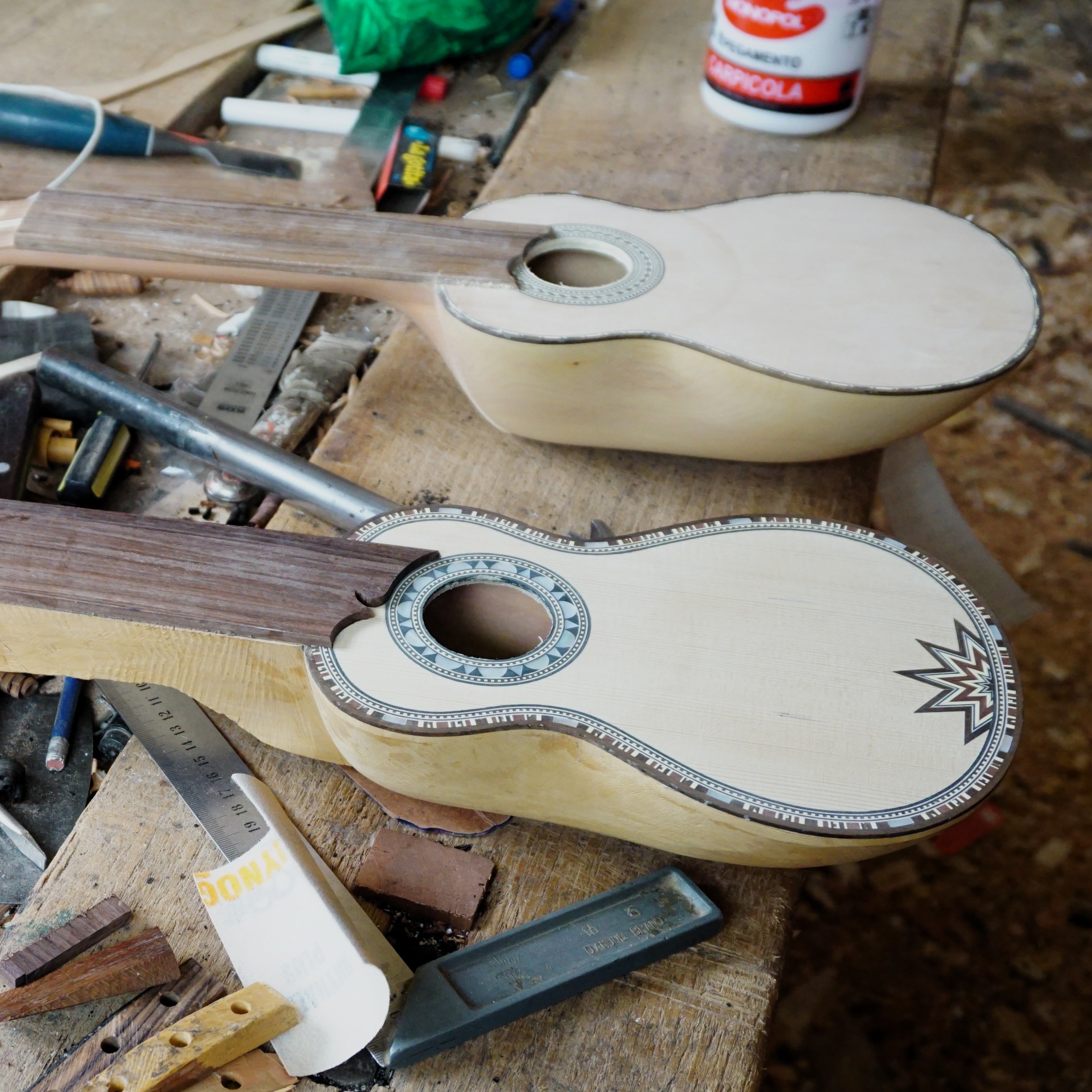
Over the last two decades, precisely due to the scarcity of raw material nearby, the majority of Aiquile luthiers have been forced to build instruments using Naranjillo sourced from the eastern parts of the country, namely the hot, low plains of the Santa Cruz region. According to the luthiers, with whom I often have the chance to talk, it is an inferior choice: “The Naranjillo from Aiquile was better,” they say. Local pride aside, one wonders whether the charango wood type being used now is no longer Aspidosperma resonans, but rather Aspidosperma pyrifolium, with which the plant was confused until recently.
One thing is certain: having the good fortune to play a genuine aiquileño Naranjillo instrument means connecting with a specific place in the world, with a restricted area where a unique charango tonewood grows, telling a story of survival, music, and resilience.